
For teachers at upper secondary and vocational schools
Ready-to-use teaching materials, built on your rules.
LPAI connects a teacher's entire school year in one integrated rulebook: the school's guidelines and the textbook become ready-to-use materials, faster and with consistently high quality.
In classroom use for one year at upper secondary schools (Gymnasium) and at a vocational school. 10 teachers are working with LPAI in the private beta.
For schools, publishers and investors
Upper secondary school (Gymnasium) · Vocational baccalaureate · Vocational school (commercial employee, Federal VET Diploma)
LPAI is currently proven in German; other languages are technically prepared.
- 1 Set the requirements
- 2 LPAI builds
- 3 Approve
You set the requirements, LPAI builds, you approve.
Sonntagabend. Drei Lektionen sind noch offen. Du gibst vor: Recht, Kaufvertrag, 90 Minuten; Lehrmittel, Raster und Begriffe der Schule. LPAI schlägt vor. Du wählst: Rollenspiel Gericht. LPAI baut. Du gibst frei. Zeit für das, was nur Du kannst. Sieben Stationen: Planen, Konzipieren, Vorbereiten, Bereitstellen, Sichern, Prüfen, Weiterentwickeln. LPAI. Fertige Unterlagen nach Deinen Regeln.
Video in German, no sound.
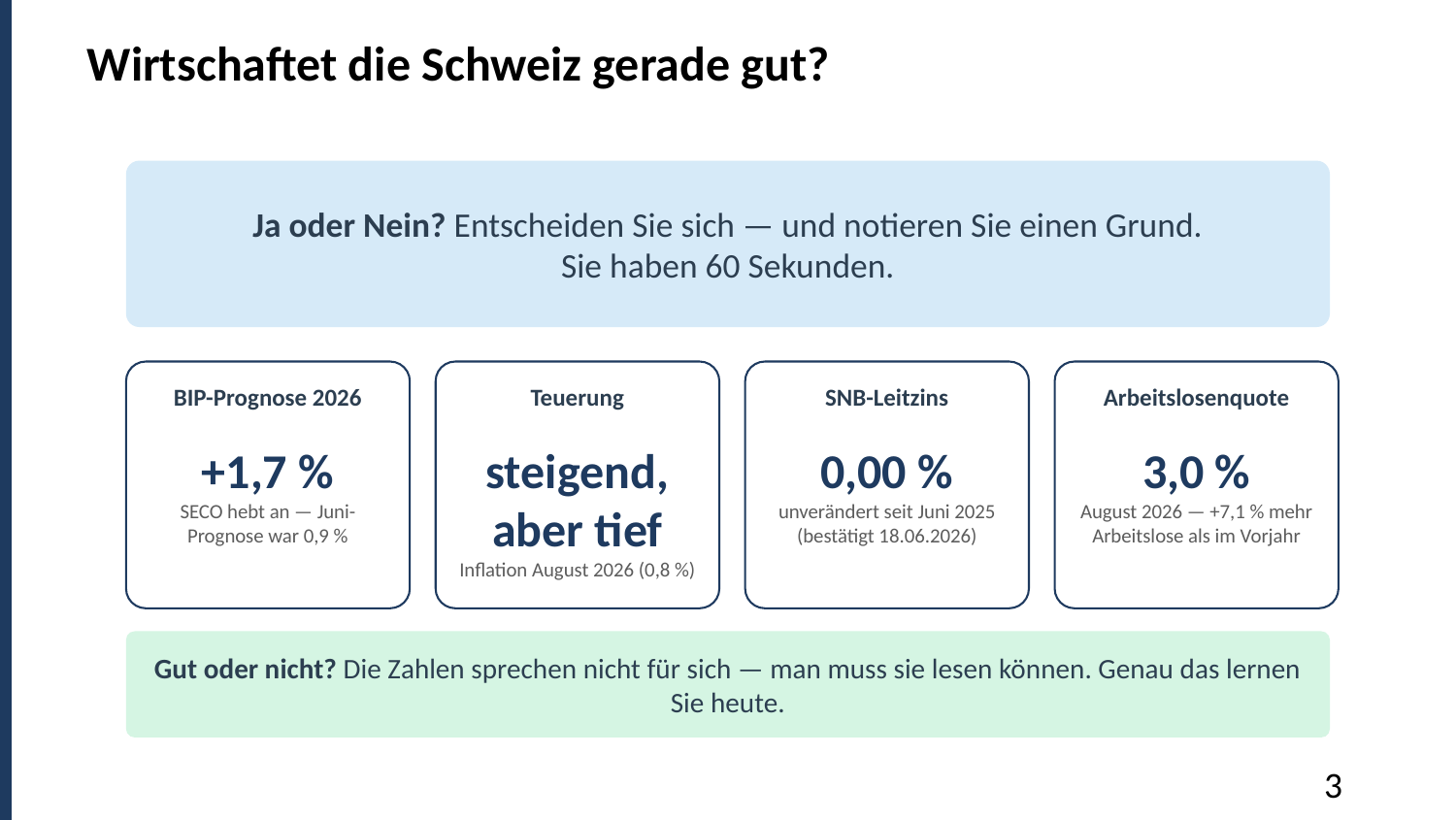
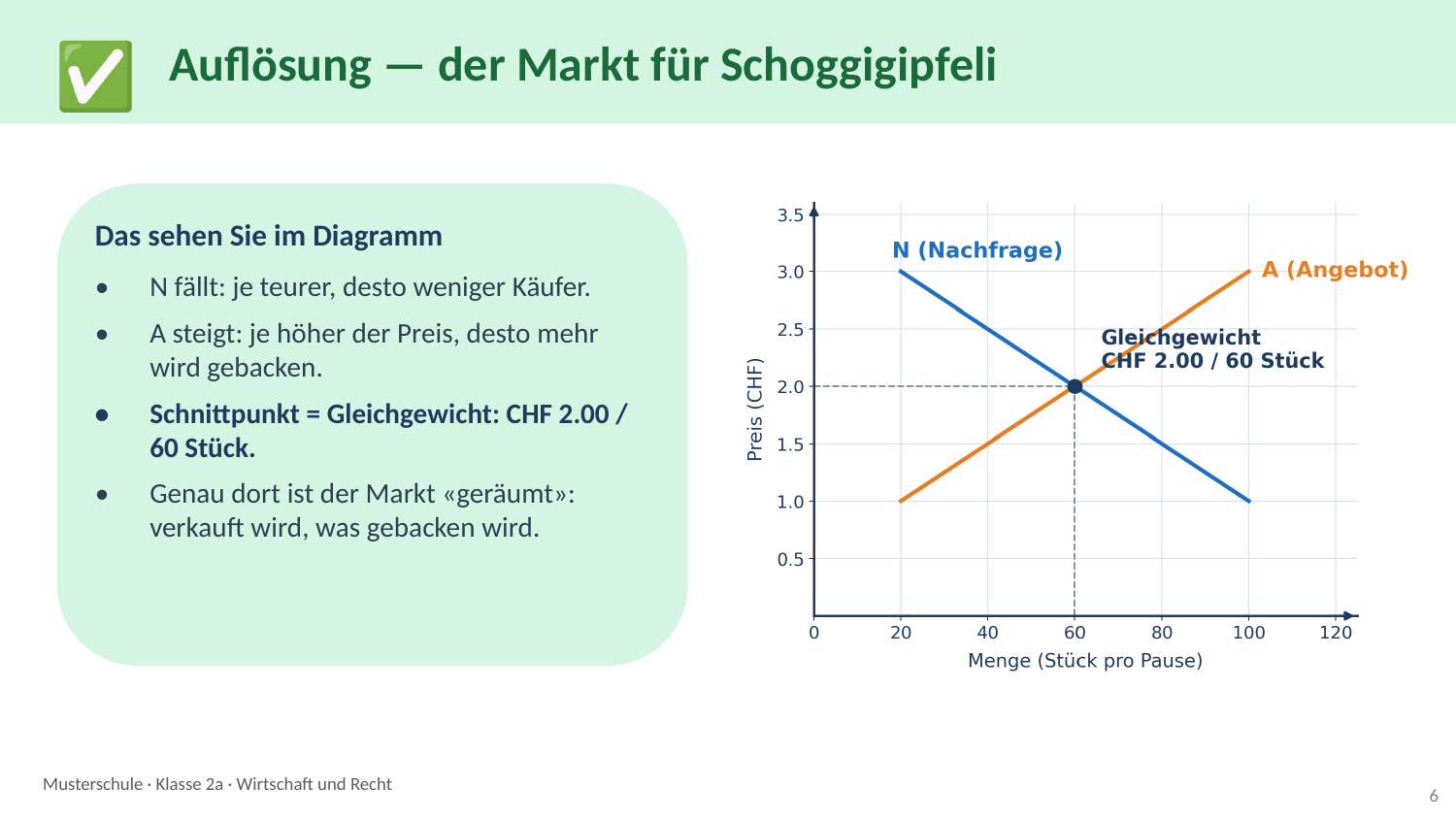
Real examples (in German) from two lessons: opening on the business cycle, solution on market equilibrium
The school year
The school year in seven stages.
Each stage builds on the previous one.
Stage 1 · Plan
The annual plan with holidays, exam dates and the status of the materials.
“What comes when, and where are the holidays and exams?”
LPAI delivers
- Annual concept with thematic arc and objectives
- Annual plan with calendar, holidays, buffer
- Exam dates already scheduled
- Material status visible per lesson
Stage 2 · Design
The unit concept with learning objectives, sequence and references to the textbook.
“How do the lessons of a topic fit together?”
LPAI delivers
- Objectives per unit, with level
- Sequence time, content, social form
- Material plan textbook with chapter
- Transitions previous, next, exam
Stage 3 · Prepare
Lessons, worksheets, learning tasks and solutions, with a lesson opener and a fixed colour logic.
“I need a double lesson on market equilibrium for Thursday.”
LPAI delivers
- Learning task 9 steps with time and social form
- References to chapter and page in the textbook
- Board diagram showing the intersection
- Solutions for students and for the teacher
Stage 4 · Provide
The class version without solutions, as a OneNote package.
“How does the material reach the students?”
LPAI delivers
- OneNote package organised by lesson
- Class version without solutions
- Teacher version with solutions and notes
- Release check no solution goes to the class
Stage 5 · Consolidate
Learning checks, concept checks and Kahoot quizzes that show what has stuck.
“Have they understood it before it counts?”
LPAI delivers
- Concept check with solution
- Learning check in several forms
- Kahoot for revision
- Feedback formative, no grade
Stage 6 · Assess
Exams with tasks, answer sheet and solution, also for Moodle and exam.net.
“A fair exam, two series, digital.”
LPAI delivers
- Three documents tasks, answer sheet, solution
- Briefing two weeks before, with objectives
- Digital Moodle XML, exam.net with Safe Exam Browser
- Practice exam for practice, no grade
Stage 7 · Improve
Updated, adapted and reusable materials for the next year.
LPAI delivers
- Update figures, cases and legal situation are brought up to date
- Individualise level, scope and working style adapt
- Localise the school's textbook, terms, grid and calendar
- Reuse with unit, type and version in the materials library
The difference
LPAI knows the school, the textbook and the calendar, and delivers ready-to-use Office files with source references.
General AI
General AI starts every request from scratch.
AI platforms
AI platforms offer individual tools side by side.
LPAI
LPAI is integrated: annual plan, lessons, learning checks and exams know the status of the others. When something changes, LPAI updates everything affected.
How it works
The teacher sets the requirements, LPAI builds, the teacher approves.
Annual plan, lesson, worksheet and exam from one rulebook: following your textbook, your grid and your school's terminology. You set the requirements, LPAI builds, you approve.
- 01ClassTopicTimeProfile
Set the requirements
Class, topic and time. Textbook, grid and the school's terminology are stored once in the profile.
- 02Rulebook
LPAI builds
The rulebook defines the structure, format and checks of every document.
- 03Approve
Approve
You review, adjust and approve. Only then does a document go to the class.
Integration
When something changes during the school year, LPAI updates the affected materials.
Exam postponed, lesson cancelled, new legal situation: annual plan, lessons, learning checks and exams know the status of the others.
Benefits
The rulebook brings speed and consistently high quality, the textbook the subject foundation.
Time
A double lesson in about 45 minutes instead of four hours.
Based on experience, not measured.
Consistently high quality
The fortieth lesson is as good as the first: what is created the evening before follows the same rules as what is created during the holidays.
What you already have gets better
LPAI updates (figures, cases, legal situation), localises (textbook, school terminology), differentiates (level, scope) and formats your existing materials.
The time goes into what only you can do: concepts, review, teaching.
Nine out of ten teachers in Germany use AI for work.
Deutsches Schulbarometer 2026, Robert Bosch Stiftung / forsa, n = 1,547, Germany
The rulebook comprises 34 skills with around 1,850 binding requirements.
Count across all skill files, as of 24.09.2026
Lesson openers in ten forms and a library of more than 50 examples.
Skill Hook, as of 24.09.2026
Why now
By 2029, schools are renewing their curricula, and upper secondary education will grow by 15 percent by 2033.
- Gymnasium: new framework curriculum, implementation by school year 2029/30.
- Vocational education: new vocational baccalaureate ordinance since March 2026, reformed commercial apprenticeship.
- More learners: around 450,000 instead of 390,000 by 2033.
- AI for relief: cantons are introducing generative AI at upper secondary and vocational schools.
New material for all of upper secondary education is being created now. LPAI builds it according to your school's guidelines.
Sources: EDK, Swiss Confederation (Fedlex), FSO, cantons of Zurich and Basel-Stadt, as of 24.09.2026
For schools
Teaching materials aligned with your school's guidelines.
An approved AI subscription on its own does not yet deliver any return for the school. What is missing is the layer above the language model: the school's guidelines, textbooks, quality checks.
A pilot with your success criteria.
You will receive a reply within five working days.
- 01
A common framework
Teaching materials aligned with your school's guidelines.
- 02
Control
No student data, approval by the teacher. The machine suggests, the teacher assesses.
- 03
Pilot
3 to 5 teachers, one semester. You set the success criteria, for example preparation time, quality of materials according to your grid and teacher satisfaction. Effort for the school: an initial meeting, an introduction of about two hours per teacher, an evaluation at the end of the semester. If it brings nothing, it stops.
- 04
No exit risk
No second platform, all files stay in your own storage.
- 05
Data protection
Your cantonal data protection law applies to use at your school. LPAI processes no student data. For the preliminary assessment, you receive an overview of data flows, providers and storage locations.
For publishers and investors
The value lies in the rulebook; the AI model is interchangeable.
Publishers
- With LPAI, the textbook stays visible to the teacher.
- Every document names the textbook and page; in every unit the book is actively used in class.
- The textbook becomes flexible to use: adapted to class, lesson length, school and current developments.
- Existing titles are sufficient as a basis.
A pilot with a single textbook shows within a few weeks whether the result holds up.
Investors
- Integration across the whole school year as the distinguishing feature.
- Development dated and logged without gaps (IP register).
- Transferable to other subjects, textbooks, languages and target groups.
Next step: a conversation about the next stage of development.
LPAI in brief (PDF in German, 1 page)
teachers are working with LPAI in the private beta.
As of September 2026
of lessons and exams have been created with LPAI.
Own teaching and beta, as of September 2026
scripts are tied to an AI provider.
Portability test, Starter Kit v1.16, 12.09.2026
dated development steps since 3 May 2026.
IP register, as of 24.09.2026
Data · Models · Approval
The machine suggests, the teacher assesses.
Approval
No document goes into the classroom without the teacher's approval.
Assessment
The machine suggests, the teacher assesses. The grade is set by the teacher (benchmark: EU AI Act, Annex III).
Data
LPAI works without student data. Inputs are class, topic and time; the profile is a text file per teacher and school. Names, grades and texts of students do not belong in it.
Models and location
Claude (Anthropic) via the desktop app, with the use of inputs for training switched off. Optionally, cross-checking with OpenAI or Google, only with the teacher's own API key. All are based in the USA. The rulebook is not tied to any provider; a local model is under review.

Who is behind it
Marc Weder, teacher of economics and law at upper secondary and vocational school. Previously 20 years at Microsoft, including in the education sector, and strategy consulting, MBA HSG.
In classroom use for a year at upper secondary schools and a vocational school.
Beta circle
Join the beta circle.
For the second semester I am looking for five to eight more teachers at upper secondary schools, vocational baccalaureate schools and vocational schools, any subject. You receive a profile for your class and materials for one unit, and you give feedback. Confidentiality is agreed in writing.
Hundreds of lessons and exams have already been created with LPAI, in my own teaching and in the beta.
How the beta works
- 1You sign up with your subject and level.
- 2Within a week, a 20-minute conversation.
- 3I set up your profile; you receive the materials for one unit.
- 4After the unit, brief feedback.
Requirements: Claude desktop app with Cowork (the «Pro» plan is enough) and Microsoft Office. Setup takes about 30 to 40 minutes.
Questions and answers
What teachers want to know first.
What data goes into the AI?
The task, the school profile, rules and excerpts from the textbook. Names, grades and texts of students do not belong in it. The profile contains no student data.
Which AI is behind it?
Today Claude (Anthropic) via the desktop app; the use of inputs for training is switched off in the settings. Optionally, cross-checking with OpenAI or Google, only with the teacher's own API key. The rulebook is not tied to any provider. A local model is under review.
Does LPAI grade my class?
LPAI creates exams, grids and grading scales. The learning platform pre-marks closed questions: the machine suggests, the teacher assesses and sets the grade.
What can LPAI not do?
Guarantee subject accuracy (which is why every statement shows its source), read the class, respond to questions. There is no measurement of learning impact yet.
What happens to my files if LPAI no longer exists?
Nothing. All results are ordinary Office files in your own storage.
May I use textbook content?
LPAI does not replace the textbook, it requires one: every statement refers to the relevant passage in your textbook. Excerpts serve your own teaching, always with the source stated. Sharing with third parties requires an agreement with the publisher.
For which subjects?
For all subjects. Today LPAI is most developed for economics and law.
Does LPAI work in Germany and Austria?
Technically prepared, not yet tested.
Who is behind LPAI?
Marc Weder, teacher of economics and law at upper secondary and vocational school. Previously 20 years at Microsoft, including in the education sector, and strategy consulting, MBA HSG.